

Welcome to the first entry in our “What’s in a Game?” series, where we look at different Tabletop Role Playing Games, how they work, and what you can expect at your first game!
Obviously, the only place to start is with the game that, for many people, is synonymous with TTRPGs as a whole: Dungeons & Dragons!
Created in 1974 by Gary Gygax and Dave Armeson, Dungeons and Dragons (or D&D, if you’re short on time) has gone from a niche after school hobby to a cultural force. Spanning everything from movies and TV shows, to video games and actual play podcasts, it’s hard NOT to be at least a little aware of the game, even if only by name. But you’re here because you want to know more, so let’s dive in!
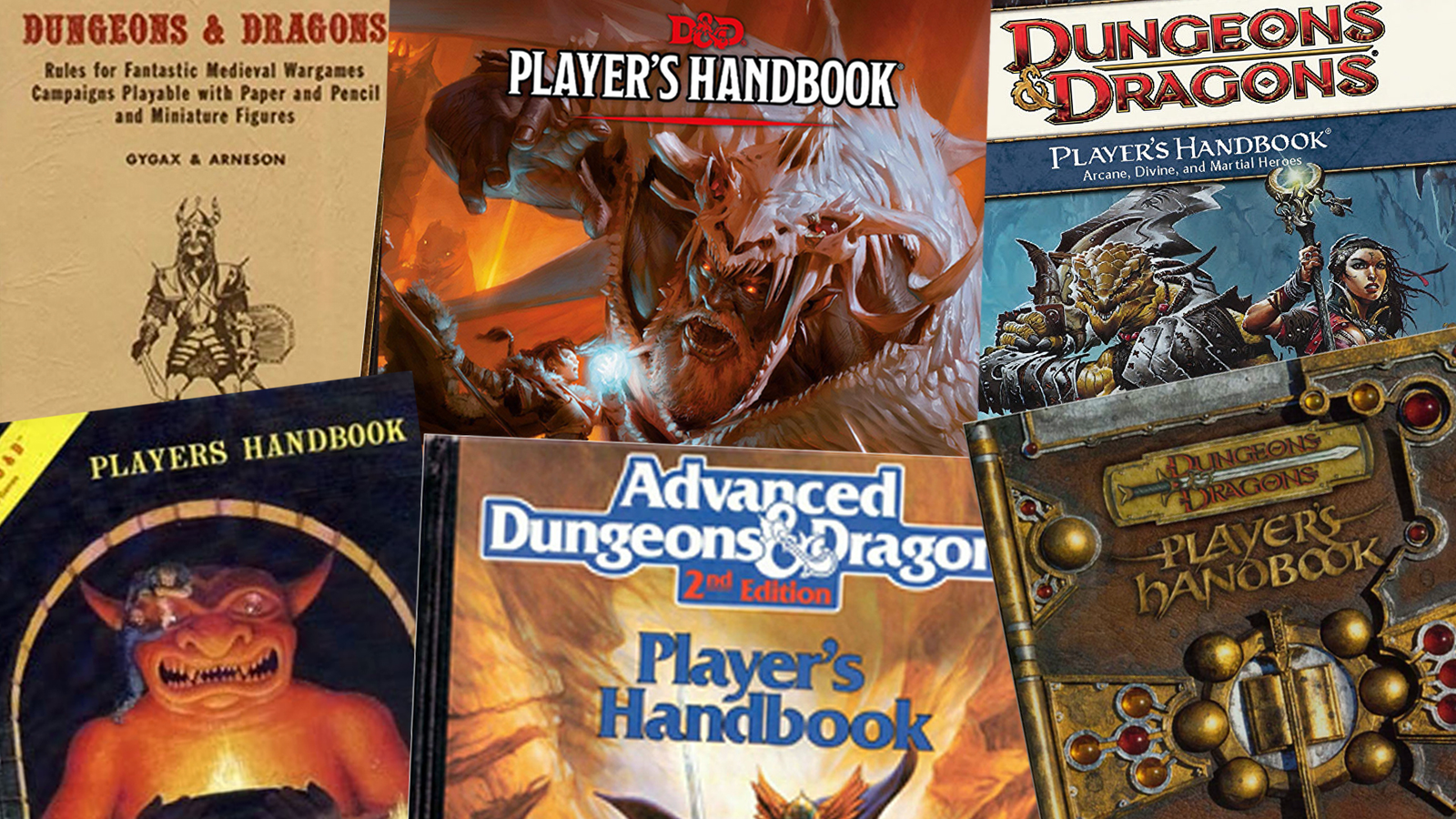
Dungeons & Dragons has come a LONG way over the years!
What is Dungeons & Dragons?
Dungeons & Dragons is a Tabletop Role Playing Game, in which players take the role of skilled heroes to take on challenges and stories. These challenges and stories are arbitrated by a player designated “the Dungeon Master”, a player who rather than play a character, plays the REST of the world, giving voice and life to the villains, allies, and other NPCs (non-player characters) while laying out consequences of the players’ actions and choices.
Games of Dungeons & Dragons are generally broken up into “sessions”. If the story is resolved entirely within a single session, it’s called a “one-shot”. A series of sessions that follows the same story is called a “campaign”. Generally, players will control the same character across multiple sessions, giving them a chance to advance their character by leveling up, unlocking new skills and abilities.
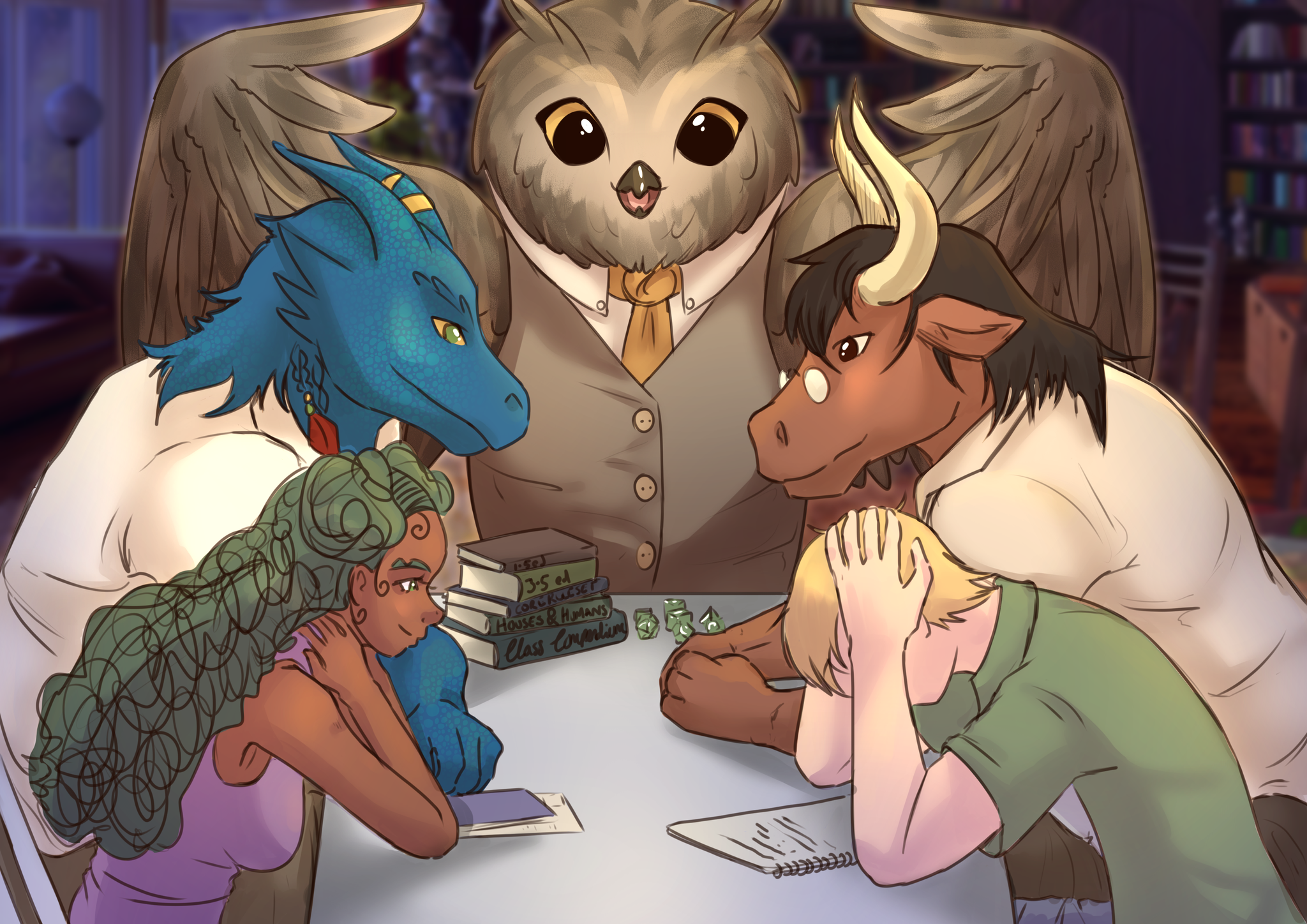
At its heart, Dungeons & Dragons is a game about storytelling. While the Dungeon Master is “in charge” of the story, the players’ decisions and choices ultimately shape what happens. This dynamic allows EVERYONE involved to create the story together, and is what makes every game of D&D wholly unique.
What Do I Need to Play?
Assuming you’re just looking to play in a game and not run one, you’ll need the following items. Of course, you could always book with Goblin Guide Games and we would handle all of this for you… but just in case:
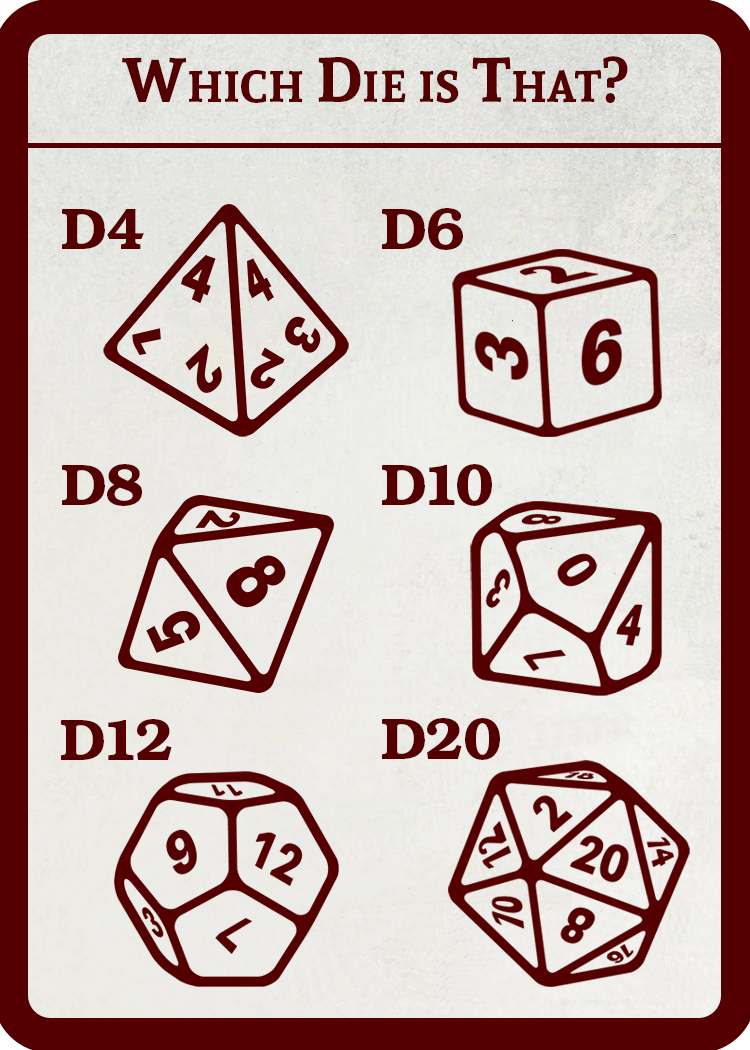
-Dice! Dungeons and Dragons uses a set of 7 different dice for its core gameplay, These can be purchased in sets, likely to simply be called “D&D Dice” or “RPG Dice”.
These dice are known by the number of sides they have, with a 20 sided dice being known as a d20, and so on. These sets should include: A d20, d12, d10, d8. d6, d4, and a special percentile dice (a special d10 used in combination with the standard d10, generally used for 1-100 tables).
Dice like these can easily be found online or in many major retailers including Waterstones, as well as at smaller, independent games shops. These can range in price from quite cheap (around £7) to very expensive (hundreds of pounds) depending on things like design, materials, etc; but don’t worry, they all roll the same, so choose the set that’s best for you!
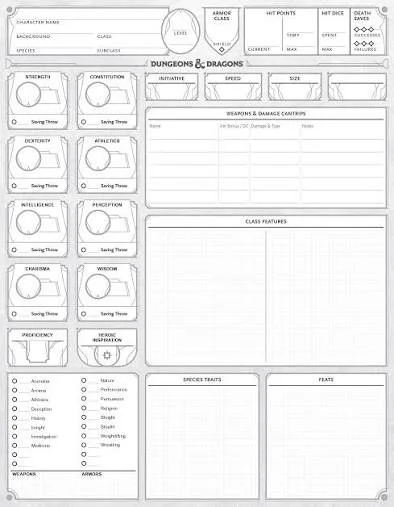
-A Character. Character creation is both the most exciting and most daunting aspect of any TTRPG.
Characters in Dungeons & Dragons start with a “class” (think job or role) that determines how they fight, work, and generally make their way through the world. Classes range from spellcasters like Wizards and Sorcerers to martial warriors like Fighters and Rangers, and everything in between.
From there, players choose a “species”, like Dwarf or Elf, which comes along with some special abilities.
Finally, they choose a “background”, which is what their character was doing before they became an adventurer, like merchant or scribe. Like species, these also come along with some specialties and items that fill out your character sheet. We’ll publish a separate article on the character creation process, so keep an eye out for that!
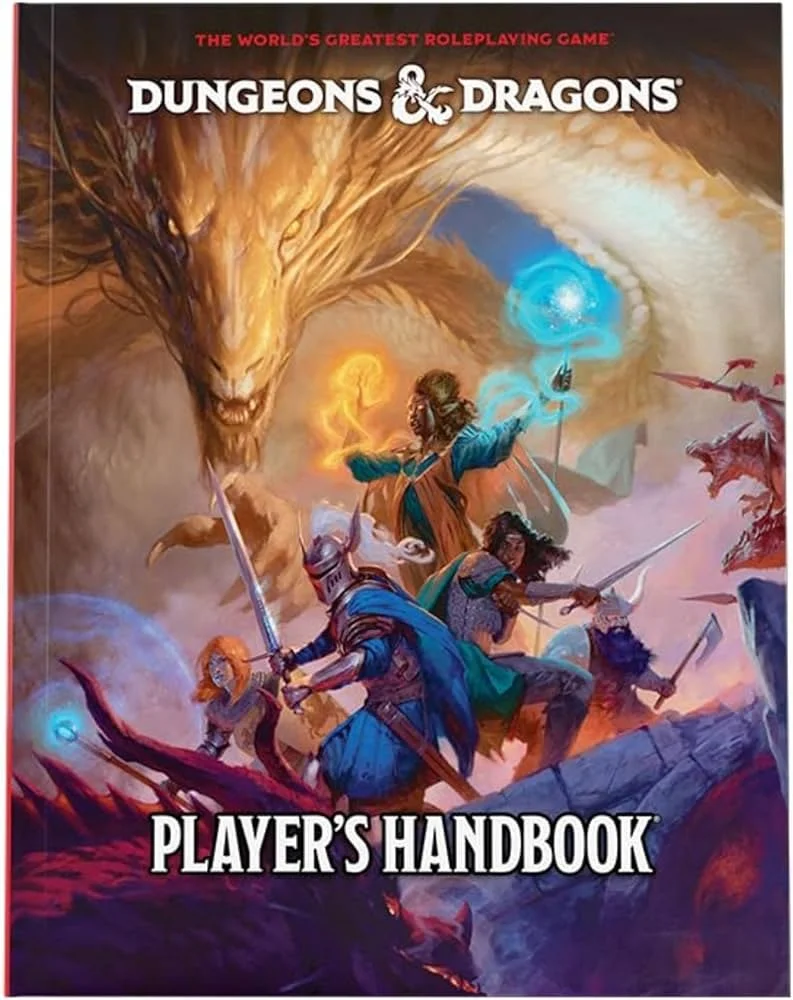
-Rules. Dungeons & Dragons is a game with a LOT of rules. Luckily, you don’t need to know all of them to start playing!
While there are HUNDREDS of rules books that have been published over the years, the only one you should even consider buying at the start is the Player’s Handbook.
Available online both digitally and physically (as well as in many local gaming stores), the Player’s Handbook contains all the rules a player needs to know including things like character creation and level up instructions, tips on playing your character, and descriptions of spells and abilities and how they work.
The most confusing element when it comes to buying books is “editions”, as over the years many different versions of D&D have been published. The most recent version of the game is 5th Edition (2024), also known as 5.5e.
-Resources. By far the best resource for players looking to get into the game is DND Beyond.
There you can build a character, get a free version of the rulebook, and see some examples of what play looks like.
While there are paid options, all of the stuff you need to get started is completely free on DND Beyond!
What Does a Game of Dungeons and Dragons Look like?
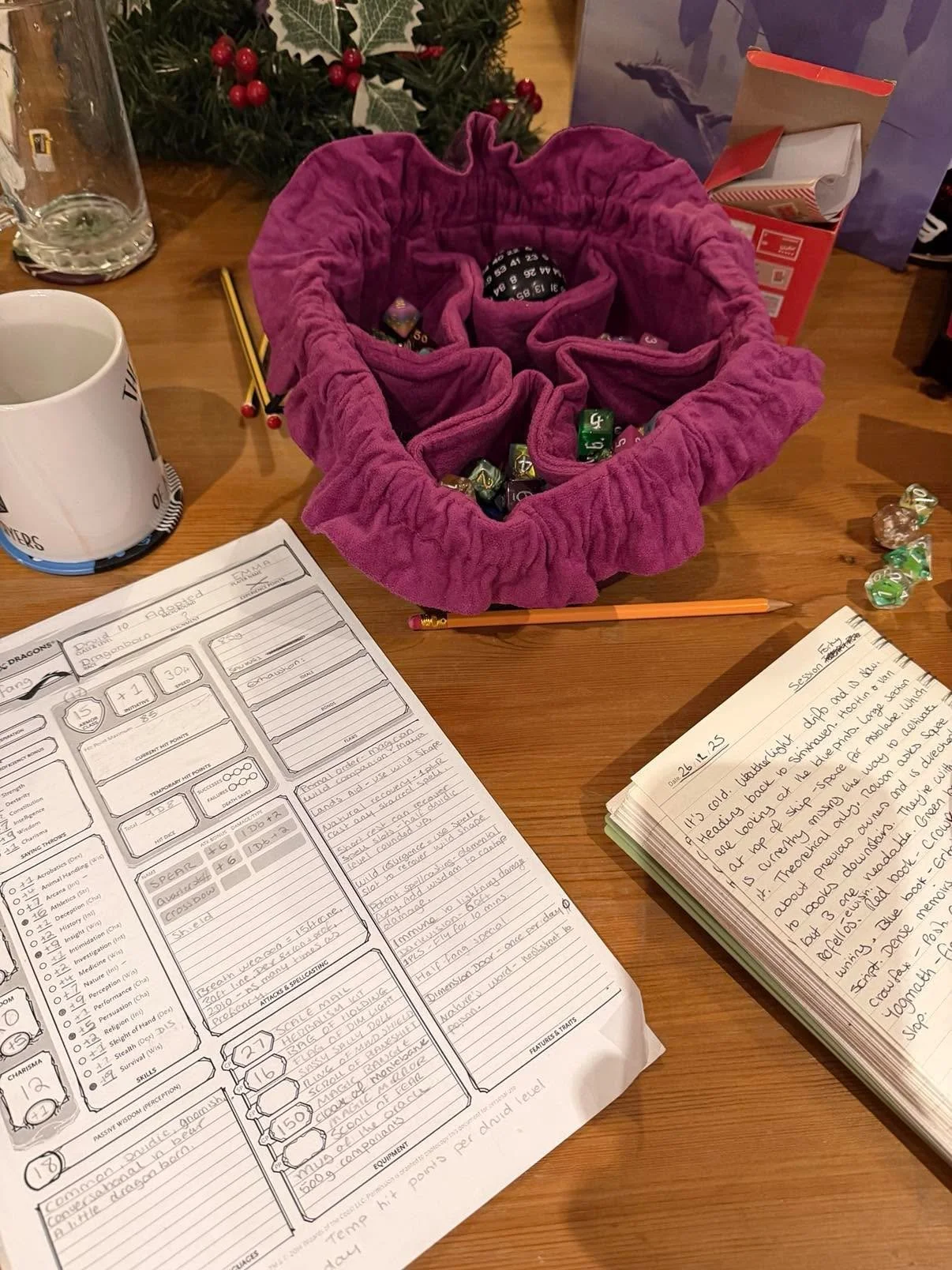
The flow of a game of Dungeons & Dragons is thus: The Dungeon Master (DM) will describe a scenario to the players; “You enter a dusty tavern, and spy a strange figure sitting in the bask” or “As you enter the cave, a band of goblins turn to attack!”.
The players will then say what their characters want to do, and the DM will narrate the outcome. Sometimes outcomes require a roll of the dice to determine how effective they are. For most interactions, a player will roll a d20, and add whatever the appropriate skill to the situation might be. The higher the number, the more likely the chance of success!
Players are free to tackle challenges in whatever way they choose, be that head on combat or by pretending to be “Goblin Safety Inspectors” (a real moment from one of our games). Every character has their own strengths and weaknesses, and every player brings a bit of themselves to their character, resulting in some truly spectacular solutions.
How Do I get Started?
Ready to tackle your first game of Dungeons and Dragons? Book with Goblin Guide Games today! Intro games start as low as £15 per player, and can be run in the comfort of your own home! Games for Kids, Teens, Adults, and Families!
Click here to Book Now!
